Black Scholes Merton Model, Binomial Tree Distribution, Put-Call Parity…….., you must have read or heard about them while exploring the derivatives market. For an trader trying to develop the logical framework of the futures and options, one needs to understand them. But, how did we develop the intuition and the knowledge to express these dynamic movements in mathematical terms. Let us look at a branch of mathematics, an extremely powerful tool, Stochastic Calculus
What is Stochastic Calculus?
Stochastic Calculus is a branch that specifically operates on stochastic processes. So why do we need it? Why can’t we deal the problem with the normal mathematics? To answer this let’s first understand what are stochastic processes.
In all of mathematics, we deal with functions and variables and perform various operations on them. In classical mathematics, we deal with functions with are continuous or you might say follow a well defined trajectory. But what if a variable doesn’t obey a fixed rule? Like in the case of bacterial population growth, or movements in a gaseous molecule? Such processes are called stochastic processes. Therefore, stochastic processes/random process can be defined as family of random variables in a probability space, where index of the family is a function of time.
How did the Stochastic process come to use in financial markets?
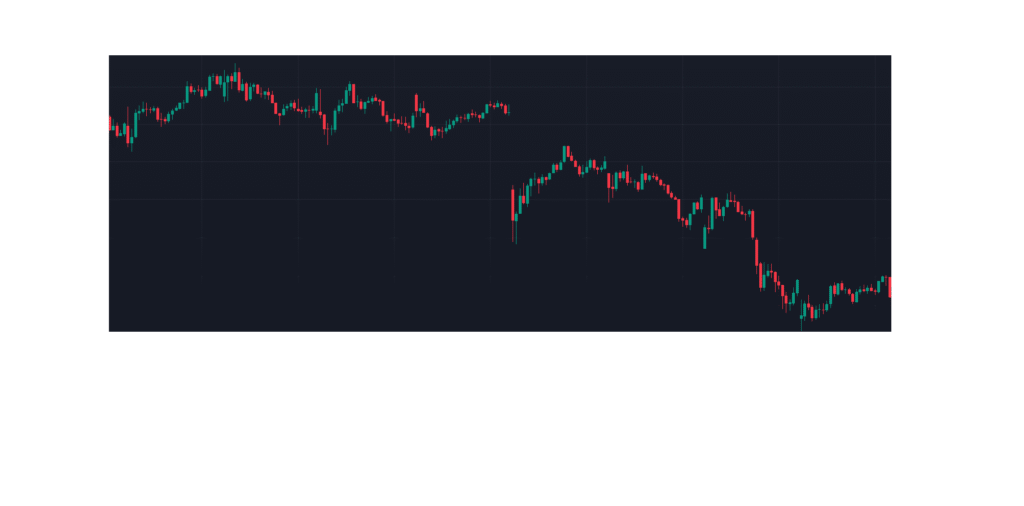
The price movement of an asset does not follow a uniform trajectory. In early 1900’s Louis Bachelier presented his thesis on option pricing. In the thesis Bachelier proposed that the stock prices follow a random walk(drawing parallels to Brownian motion). The thesis laid the foundation of what would become stochastic process. Then Norbert Wiener in 1920s and Kiyoshi Ito in 1940s provided rigourous mathematical framework for random walks. Fischer Black and Myron Scholes utilised the framework laid by Wiener and Ito to develop an model of option pricing for European style options in 1973. This gave financial professionals a tool to consistently derive a “fair” price of options, which lead to the prominent rise of quantitative finance.
Leave a Reply